
Cold-Chain Solutions
Cold-Chain Solutions for Insulin, Reagents and Trial Shipments
Pharmaceutical cold chain is not one problem. A monthly insulin loop through community pharmacies behaves nothing like a single clinical trial shipment flying to a research site, and neither behaves like a hospital's daily blood reagent replenishment. This page shows how we configure packaging and monitoring for each case, and what changes when the lane, the payload, or the regulatory environment changes.
A lane is not a product
Four inputs decide the container class and the logger: the labeled range, the lane duration, the shipment volume, and whether the route is a closed loop or a one-way run.
Insulin distribution to pharmacies and clinics
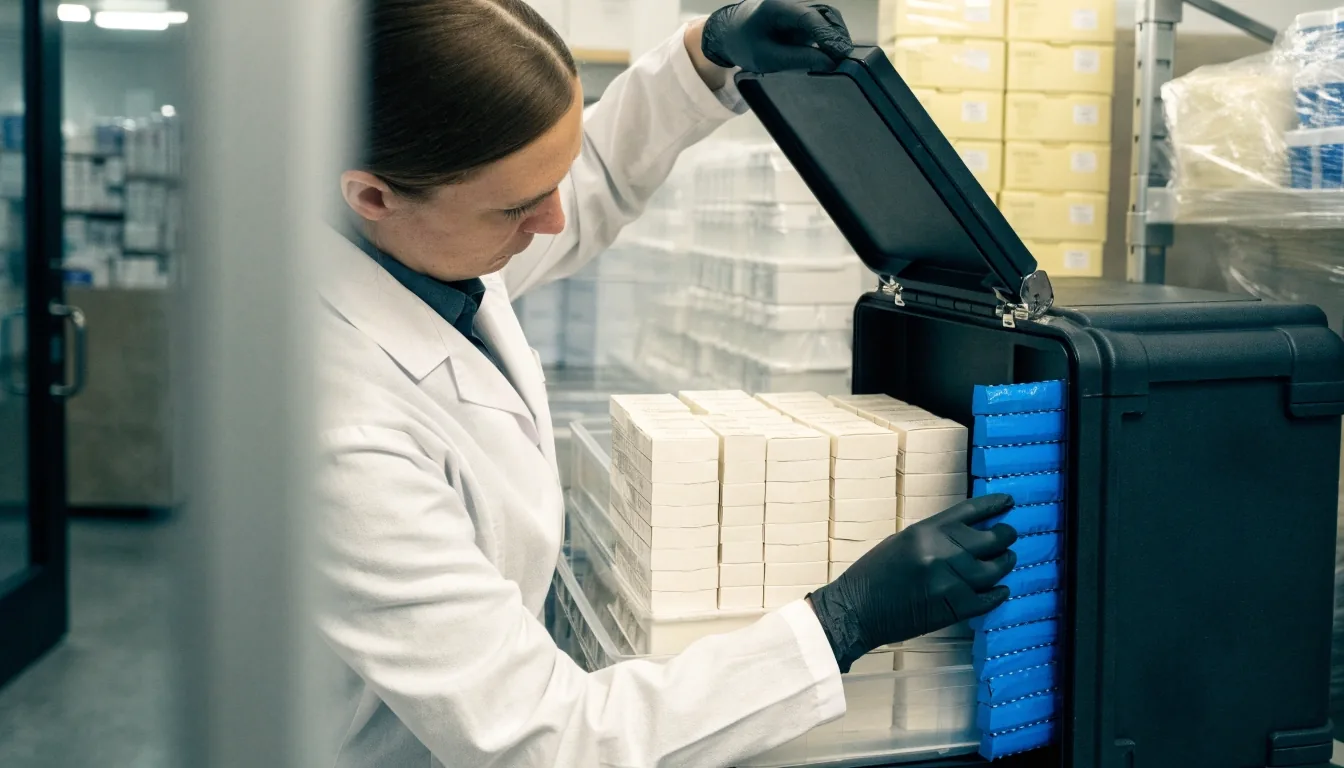
Insulin has a labeled storage range that usually sits in the refrigerated band, and the shipments are recurring, high-volume, and often delivered on fixed weekly routes. That combination favors reusable containers with a documented re-qualification interval and reusable PCM packs that are reconditioned at the depot. The logger choice is usually single-use, because recovering a logger from a pharmacy is more administrative work than the device is worth.
The risk profile here is process drift, not equipment failure. If a pack is conditioned for the wrong duration on a busy Monday, the lane fails quietly. We supply conditioning tables and packing checklists written for a depot workflow rather than a laboratory bench.
What the recurring loop needs
- Reusable containers with a re-qualification interval written into the depot schedule, not left to memory.
- PCM packs reconditioned at the depot, with a conditioning table that survives a busy Monday shift.
- Packing checklists the depot team actually fills in, so the route record is complete before the van leaves.
- Single-use loggers sized to the shipment, so no pharmacy has to hand a device back.
Blood test reagents and diagnostic sample transport
Reagents and diagnostic samples move in smaller units, often on a same-day courier route between a laboratory and a collection site. Hold duration requirements are shorter, but temperature evidence matters just as much, because a rejected sample means a repeated patient visit. Cooler bags with sized PCM packs handle most of these routes, paired with a temperature and humidity logger for the journey record.
For laboratories running multiple collection sites, we size bags to the standard sample transport box so the pack fits without repacking at the collection point. That detail removes a step from a courier's morning.
Route shape
Same-day courier between laboratory and collection site
Hold durations are short, so the packing weight matters less than the temperature record that travels with the box.
Packaging
Cooler bags with sized PCM packs
Bags are dimensioned to the standard sample transport box so the courier does not repack at the collection point.
Evidence
Temperature and humidity logger for the journey
A rejected sample means a repeated patient visit, so the journey record carries the same weight as the hold time.
Clinical trial shipments and protocol-bound lanes
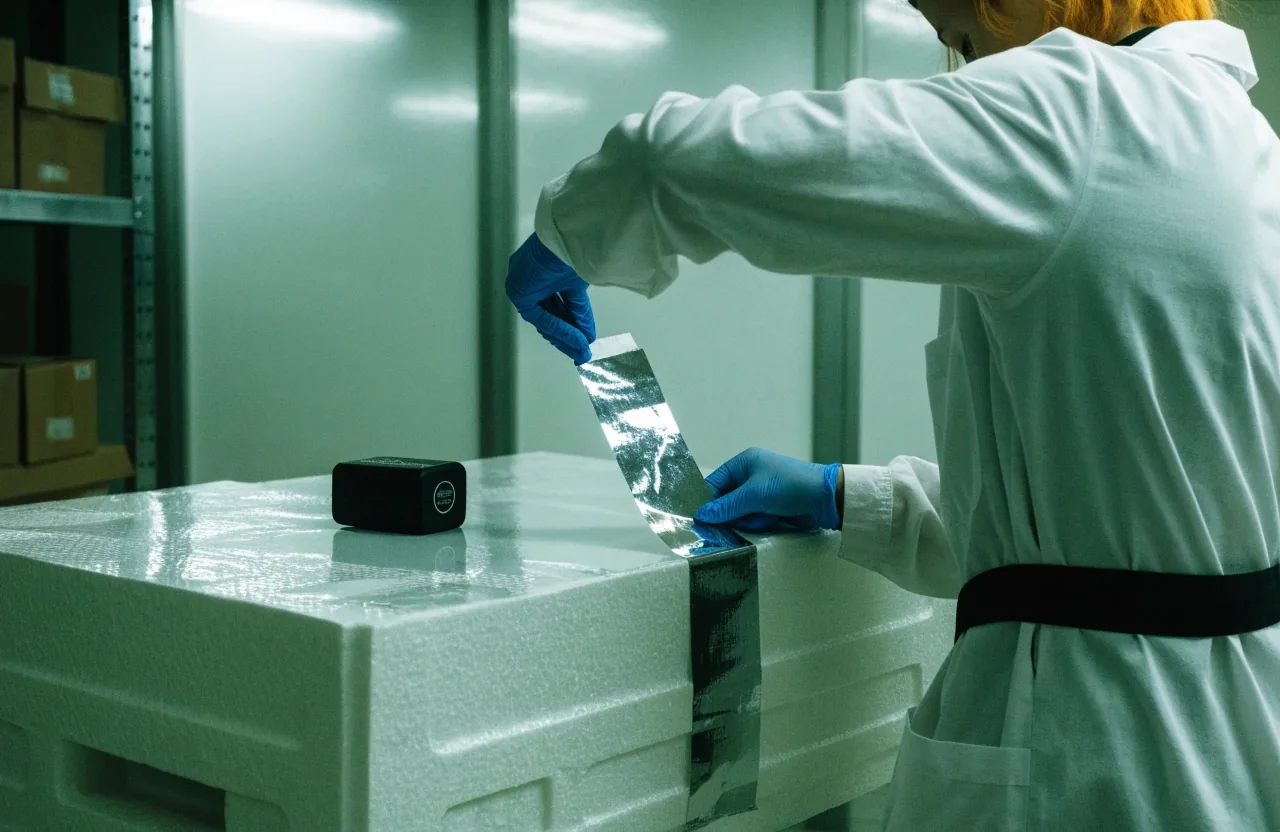
Clinical trial shipments carry their own complication: the protocol defines the acceptable temperature range, the documentation format, and sometimes the exact logger specification. Our job is to configure packaging that meets the protocol, then supply the qualification report that proves it. Where a sponsor requires an electronic record with an audit trail, we select a logger model listed as compliant with FDA 21 CFR Part 11.
Trial shipments are often one-way and low-volume, which favors single-use containers and loggers. We keep the documentation trail intact for each shipment so the sponsor's file is complete.
Ask about clinical trial shippingFrozen lanes and low-temperature payloads
Frozen shipments around -20 °C need their own qualification data, because insulation and PCM behave differently at low temperature than in the refrigerated band. Dry ice is one option, and mechanical freezer packs are another, but both change the container's validated profile. We qualify frozen configurations separately and state the hold duration for the specific ambient profile you expect.
If your lane crosses a warm season, the qualification should reflect the warm ambient case, not the average.
Controlled ambient
Controlled ambient and 15 to 25 °C lanes
Some pharmaceutical products are stored at controlled ambient rather than refrigerated, and the packaging logic inverts: the container must resist both warming and cooling. This is common for certain reagents and for products moving through climates where a winter night is as much a risk as a summer afternoon. PCM setpoints for these lanes sit inside the 15 to 25 °C band, and the qualification report covers both a hot and a cold ambient case.
We ask for the route's seasonal extremes, not just the annual average, before quoting a controlled ambient configuration.
Last-mile and courier-route packaging
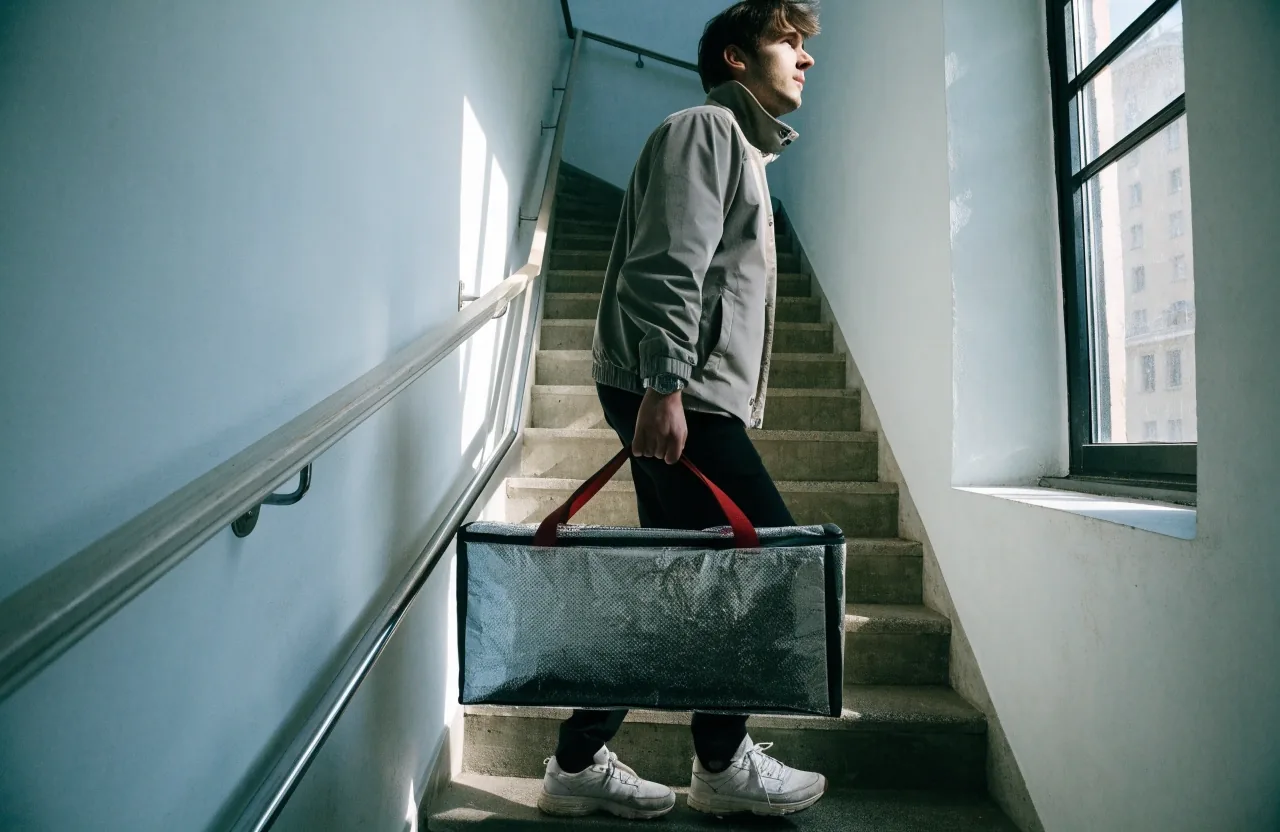
Last-mile pharmaceutical delivery is a handling problem as much as a temperature problem. Bags get loaded into vans, carried up stairs, and left in a lobby for a few minutes. A shock-capable logger records whether the payload took a hit, which is useful evidence when a product arrives damaged and the cause is disputed.
We size last-mile packaging to fit standard courier crates and van shelving so it does not get repacked in transit.
Lane qualification and thermal mapping
A lane qualification documents how a specific packaging configuration performs on a specific route with a specific payload. It requires the ambient profile, the duration, the payload mass, and the handling steps. Thermal mapping identifies where temperature varies inside the container, which is how you decide where to place the logger and the payload.
We produce qualification reports for catalog configurations and lane-specific reports on request. If your SOP requires a live study, we supply the packaging and loggers and review the resulting data with your team.
Request a lane qualification-
1
Ambient profile and route duration
The seasonal extremes the lane actually crosses, and how long the payload stays inside the container door to door.
-
2
Payload mass and packing configuration
Payload mass, pack arrangement, and how the container is loaded — the inputs that set where the cold mass actually sits.
-
3
Thermal mapping inside the container
A mapping run shows where temperature varies inside the box, which decides logger and payload placement.
-
4
Qualification report, catalog or lane-specific
The written result for your file. Catalog configurations carry a standing report; lane-specific routes get their own.
Excursion handling and post-delivery investigation
An excursion is a documented temperature deviation outside the labeled range. Handling it well means having the logger data, the qualification report, and a written investigation procedure ready before the deviation happens. Our documentation set is designed to support that procedure: the logger record shows what happened, the qualification report shows what the container was expected to do, and the difference is what your quality team investigates.
We do not make the disposition decision. That belongs to your qualified person, and we supply the evidence they need to make it.
Working with logistics networks
Many of our customers ship through healthcare logistics networks that monitor temperature in transit and provide end-to-end reporting with deviation explanations. Our packaging and loggers fit into those workflows: the container holds the range, the logger records it independently, and the network's reporting provides the in-transit view. When the two records are compared after delivery, you have a cross-check rather than a single point of evidence.
We can align packaging specifications with a network's handling requirements if you tell us which one you use.
Regulatory expectations in Europe
European transport expectations for pharmaceuticals trace back to EU GDP principles, and MHRA guidance is a common benchmark that quality teams cite when writing their own transport validation. In practice, that means documented temperature control, documented qualification, and a documented investigation when something goes wrong. Packaging and logger choices are part of that evidence chain, not separate from it.
We keep our documentation aligned with those expectations and update it when the guidance changes. Material specifications, delivery terms, and our ISO certificates are documented on the Quality & Certifications page.
Review our ISO certificates and quality documentationConfiguring a solution for your lane
Start with the product's labeled range, the lane duration, the shipment volume, and whether the route is one-way or a closed loop. Those four inputs narrow the container class and the logger model quickly. If you already have a qualification report from a previous supplier, send it and we will match or exceed the documented hold time.
Labeled temperature range
The range printed on the product, not the range you would prefer. Refrigerated, frozen, or controlled ambient changes the container class.
Lane duration
Door-to-door hours, including the time a box sits in a lobby or a loading bay before anyone opens it.
Shipment volume
A weekly pallet loop and a single trial box do not want the same container. Volume decides reusable or one-way.
Closed loop or one-way
A closed loop justifies re-qualification and logger recovery. A one-way run favors single-use packaging and a logger that stays with the shipment.
A specialist replies with a configuration proposal, the relevant certificates, and a delivery schedule.
Questions we get before a lane is quoted
Can you configure packaging for a specific clinical trial protocol?
Yes. Send the protocol's temperature range, documentation format, and logger specification, and we will propose a configuration that meets it, with the qualification report to support it. Where the protocol requires an electronic record with an audit trail, we select a logger model listed as compliant with FDA 21 CFR Part 11.
What do you need from me to quote a lane?
The product's labeled temperature range, the lane duration, the shipment volume, and whether the route is one-way or a closed loop. Seasonal ambient extremes are useful for controlled ambient lanes. With those, we can name a container class and a logger model.
Do you handle excursion investigation?
We supply the evidence: logger data, qualification reports, and calibration certificates. The disposition decision belongs to your qualified person, and our documentation is structured to support that investigation.
Is your packaging compatible with healthcare logistics networks?
Yes. Our containers and loggers work alongside networks that monitor temperature in transit and provide deviation reporting. If you tell us which network you use, we can align packaging specifications with its handling requirements.
Tell us the lane, the payload, and the duration
A cold-chain specialist at our Wallisellen office will come back with a configuration proposal, the relevant ISO certificates, and a delivery schedule for B2B orders across Switzerland and into EU lanes.
ThermoVault Pharma Logistics AG · Industriestrasse 42, 8304 Wallisellen, Switzerland · Monday to Friday, 08:00–17:30 (CET)